


-
 Home
Home - | Training
- | National Development Programs
- | Training of Trainers (TOT)

Training of Trainers (TOT)
The TOT National Development Program aims at cultivating a new generation of trainers within the financial sector. This initiative specifically targets Qatari nationals who have demonstrated exceptional knowledge and expertise in their fields. The program's core objective is to harness the potential of these individuals by providing them with the necessary training to effectively impart their skills and knowledge to others. By doing so, we aim to create a sustainable cycle of knowledge transfer that not only elevates the professional standards within the financial sector but also contributes to the nation's broader economic development goals.
 Download Brochure
  Inquire now
 Book an appoinment
Program Benefits
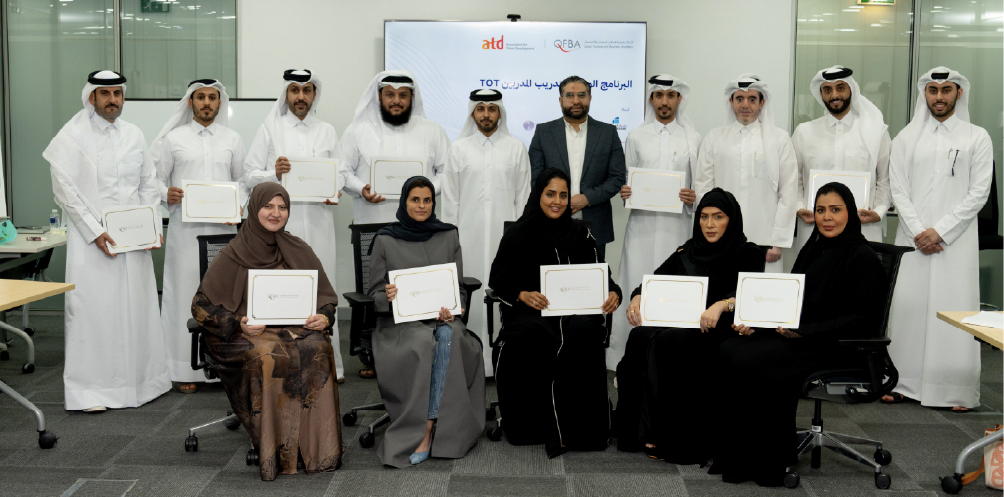
Over the past two years, the program has been successfully delivered in two editions, benefiting a total of 36 national participants. The most recent edition included 16 participants and was conducted in-person, in Arabic, in partnership with the Association for Talent Development (ATD). ATD, an internationally recognized leader based in the USA, specializes in empowering and cultivating trainers. With more than 80 years of experience, ATD has successfully trained over 180,000 learners worldwide. By joining our TOT program, you will:
-

Gain an internationally recognized Train-the-Trainer (TOT) certification, customized in partnership with ATD.
-
Develop practical skills across the entire training cycle, from planning and delivery to post-training support.
-
Enhance your ability to engage and motivate learners using proven, research-backed techniques.
-
Receive personalized mentorship and shadowing opportunities from experienced trainers.
-
Build confidence to independently design and deliver courses within your area of expertise.
-
Choose a subject-specific pathway to deepen your knowledge and practical experience in your chosen field.
-
Benefit from hands-on practice sessions with constructive feedback from peers and expert facilitators.
-
Expand your professional network and learn best practices from industry leaders.
-
Position yourself as a qualified trainer, ready to make a meaningful impact in your organization or community.

Structure
Program Modules
- Facilitating Formal Learning + Planning and Coordinating Training Events
Module 1: Facilitating Formal Learning Types of Learning – Learning Frameworks Types of Formal Learning Module 2: Planning and Coordinating Training Events Helping Learners Make the Most of the Experience Managing Logistics for a Smooth Event Creating the Ideal Learning Environment
- Preparing to Facilitate + Applying Learning Science + Selecting Delivery Options and Methods
Module 3: Preparing to Facilitate Understanding the Audience and Their Needs Creating a Facilitation Plan Prepare to Deliver Your Training. Module 4: Applying Learning Science Basics of Cognitive Science Addressing Variations in Learner Preferences and Cognition Understanding How Adults Learn. Module 5: Selecting Delivery Options and Methods Selecting Effective Delivery Options Delivering to Meet Learner’s Preferences Matching Learning Methods to Desired Outcomes Selecting Engaging Delivery Methods
- Facilitation Styles and Techniques+ Creating a Positive Learning Environment + Engaging and Managing Participants
Module 6: Facilitation Styles and Techniques. Presenting as a Professional Facilitation Roles and styles Facilitation Techniques Module 7: Creating a Positive Learning Environment. Creating a Positive Learning Environment Through Effective Facilitation Engaging Participants Engaging Facilitator Communications Module 8: Engaging and Managing Participants Creating a Safe and Comfortable Learning Environment Managing Conflict and Group Dynamics
- Designing and Developing Learning Materials + Supporting Informal and Self-Directed Learning
Module 9: Designing and Developing Learning Materials Designing Learner Materials With the Learner in Mind A Closer Look at Design Designing Course Materials to Assess Learning Evaluations: Kirkpatrick’s 4 levels Formative vs. Summative Evaluation Module 10: Supporting Informal and Self-Directed Learning What Is Informal Learning? Ways to Curate Informal Learning Content Facilitating Learning on the Job Opportunities Staying Up-to-Date With Technology and Industry Trends
- Facilitation Practice Overview
Module 11: Facilitation Practice OverviewOne of the course components is an opportunity to conduct a 10-minute facilitation practice during the final day of the course and receive feedback from your facilitator and peers.

Calendar
| Sun | Mon | Tue | Wed | Thu | Fri | Sat |
|---|---|---|---|---|---|---|
| 31 | 1 | 2 | 3 | 4 | 5 | 6 |
| 7 | 8 | 9 | 10 | 11 | 12 | 13 |
| 14 | 15 | 16 | 17 | 18 | 19 | 20 |
| 21 | 22 | 23 | 24 | 25 | 26 | 27 |
| 28 | 29 | 30 | 1 | 2 | 3 | 4 |

Target Audience
Qataris and/or individuals born to a Qatari mother
At least 5 years of professional expertise
Holders of a university degree in their area of expertise
Application and Selection process
- Copy of the Qatari ID or Passport
- Copy of Academic Qualifications
- Copy of Certifications (if applicable)
- Copy of Experience Letters
- Updated CV
Applicants will undergo a shortlisting process that may include multiple assessments to identify the most qualified candidates for recruitment into the TOT Program.


Main Partners


Gallery
Sign Up / Sign In to apply
Verify your mobile number to continue.

